📊 Vitalik roasts prediction markets
Plus: Senate Democrats push CFTC to sidestep prediction market lawsuits and DraftKings chases a multi-billion opportunity.
GM. You’re reading PredictionDesk, the daily newsletter that helps you become a prediction markets expert in under 5 minutes.
Here’s what we got for you today:
⚔️ Ethereum founder calls out prediction markets
⚖️ Senate Democrats urge CFTC to stay out of prediction market lawsuits
💥 DraftKings CEO sees “billions” in prediction market opportunity
📈 Market Moves
📊 Odds & Ends

VITALIK TURNS ON PREDICTION MARKETS ⚔️
Vitalik Buterin, the Ethereum cofounder and early Polymarket investor, dropped a lengthy thread on X this past Friday that has the entire prediction markets world talking. The man who once championed these platforms as a healthier alternative to traditional markets is now waving a giant red flag. His message was simple and brutal: prediction markets are sliding into what he calls "corposlop."

Let's break this down because it matters more than you think. Buterin argues that prediction markets have overconverged toward an unhealthy product market fit. Instead of providing genuine societal information value, platforms are increasingly leaning into short term crypto price bets, sports gambling, and dopamine fueled speculation that offers zero long term fulfillment.
In other words, prediction markets are starting to look like every other gambling app on your phone. That should concern every single person in this industry.
Vitalik splits the current prediction market ecosystem into two camps: smart traders who profit from superior information, and money losers who essentially subsidize those profits by placing uninformed bets.
Buterin acknowledges there is "nothing fundamentally morally wrong with taking money from people with dumb opinions." But he warns that there is something "fundamentally cursed" about building your entire business model around it.
Why? Because it creates a perverse incentive loop that pulls platforms in the wrong direction every single time. When your revenue depends on attracting uninformed bettors, your platform will inevitably start optimizing for exactly that. You build communities that encourage dumb opinions. You design interfaces that maximize dopamine hits rather than genuine insight. You chase short term revenue instead of building something that actually matters.
That, according to Buterin, is the slide into corposlop.
What makes this so interesting is that he said the opposite just a few months ago. Back in December 2025, Buterin described participation in prediction markets as "healthier" than traditional market participation and argued that concerns about them were overblown. The fact that he has now reversed course so publicly tells you something significant is happening behind the scenes.
When someone with this much skin in the game sounds the alarm, you should probably listen carefully. Buterin didn't just throw stones at the industry and walk away though. He laid out a genuinely ambitious framework for what prediction markets could become if builders chose a different path.
The vision goes something like this: onchain markets tied to price indices across various categories of goods and services, all broken down by region. Users would run local AI large language models that analyze their personal spending patterns. These models would then construct customized baskets of prediction market positions tailored to each individual's financial reality.
It sounds wild, but Buterin went even further with the implications. He argued that if prediction markets evolved into proper hedging instruments, we would have no need for fiat currency at all. People could hold stocks, ETH, or other assets for wealth growth, and use personalized prediction market shares whenever they wanted stability.
This conversation is happening against the backdrop of explosive industry growth. Kalshi and Polymarket processed over $44 billion in combined volume throughout 2025. Kalshi currently sits at an $11 billion valuation while Polymarket clocks in at $9 billion after aggressive fundraising rounds. Jump Trading recently signed on as a market maker for both platforms, and Coinbase launched prediction markets across all 50 U.S. states through Kalshi's infrastructure.
The industry has never been bigger, which is precisely why Buterin's timing feels so intentional. We love prediction markets, and everyone reading this newsletter probably does too. But Buterin is raising a question that deserves an honest answer from every platform, builder, and trader in this space. Are we building the future of information and finance, or are we just building another slot machine?
The money is flowing, the volume is surging, and the headlines keep getting bigger. But if the entire ecosystem is being propped up by uninformed retail bettors chasing dopamine, then the foundation is a whole lot shakier than anyone wants to admit.
Buterin's closing words on the thread deserve repeating here: builders should focus on creating the next generation of finance, and leave the corposlop behind. The prediction markets industry is at a crossroads, and the choices made in the coming months will define what this space actually becomes. We will be watching every single move closely.

SENATORS TO CFTC: SIT THIS ONE OUT ⚖️
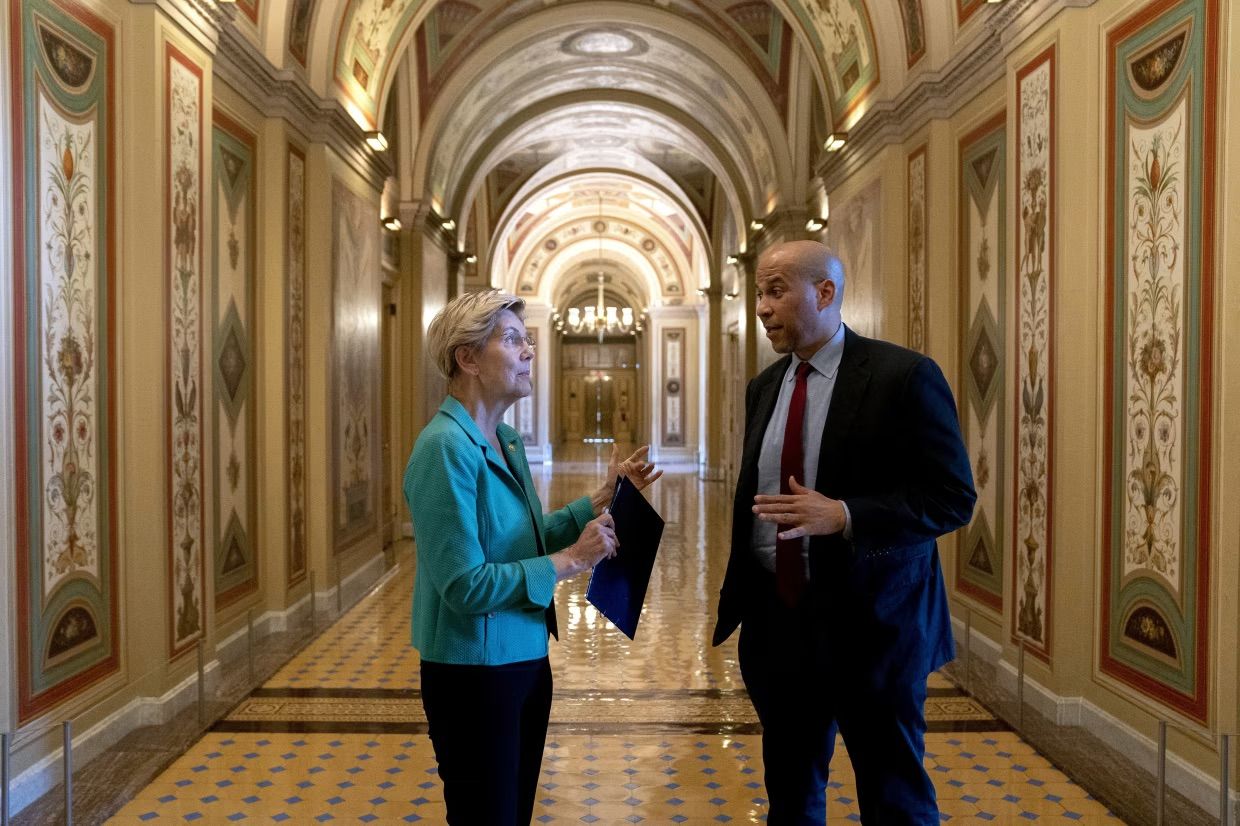
Twenty-three Senate Democrats sent a letter Friday to CFTC Chair Michael Selig demanding the agency stay out of ongoing court battles over prediction market legality - specifically cases involving contracts tied to sports, war, and other prohibited events. Led by Sens. Adam Schiff and Catherine Cortez Masto, the letter landed days after the CFTC withdrew a proposed rule that would have classified sporting events as "gaming" and pulled prior guidance cautioning exchanges about sports-based event contracts. The lawmakers characterized the moves as "greenlighting" prediction markets, particularly around sports.
Source: Wall Street Journal
On Feb. 5 - one day after those withdrawals - the CFTC asked the Ninth Circuit for permission to file an amicus brief in a Nevada appeal challenging whether state gaming laws apply to event contracts. The brief would preview arguments about the CFTC's "exclusive authority" under the Commodity Exchange Act. If filed, it could effectively hand Kalshi and other platforms a federal legal shield against state-by-state gambling enforcement. That's exactly what the senators are trying to block.
A Massachusetts judge ruled last month that Kalshi must stop offering sports contracts in the state within 30 days unless it obtains a state gaming license - the first preliminary injunction entered against a prediction market platform. A Nevada federal judge reached a similar conclusion in November, ruling Kalshi is subject to state gaming rules. Both courts rejected the argument that CFTC oversight alone preempts state gambling regulation.
An amicus brief asserting exclusive federal jurisdiction would undercut the legal theory those states have successfully argued: that these products function like gambling and fall within traditional state regulatory power. It would also widen the gap between the CFTC under Selig, a Trump appointee sworn in just two months ago, and the agency's prior posture, which was far more skeptical of sports-based event contracts.
The senators frame this partly as consumer protection - 18-year-olds trading sports contracts on Kalshi while state-licensed sportsbooks require you to be 21 - but the real fight is jurisdictional. If the CFTC intervenes and courts buy a broad preemption argument, states lose their ability to regulate these products entirely. No licensing requirements, no age floors, no tax revenue. For an industry generating billions in volume and distributing through retail brokerages like Robinhood, that's not abstract.
This confrontation was probably inevitable once the CFTC started reversing course under new leadership. The agency can't quietly deregulate through rule withdrawals and then loudly intervene in courts to shield platforms from state enforcement - not without drawing fire from the Hill. Whether 23 Senate Democrats can actually stop an amicus filing is another question entirely. But the letter puts Selig on notice: if the CFTC picks sides in these lawsuits, it owns whatever comes next.

DRAFTKINGS THINKS IT CAN OUT-EXECUTE KALSHI AND POLYMARKET 💥
DraftKings switched on Crypto.com’s prediction market engine for DraftKings Predictions the week before the Super Bowl, layering it on top of the event contracts it already offers through CME Group. CEO Jason Robins told Front Office Sports the partnership “expands our content offering significantly” and puts the product “in a much better place” ahead of their biggest engagement weekend of the year.
Robins is pursuing what he described as potentially “billions of dollars of revenue” for their company, with meaningful incremental EBITDA if DraftKings captures a real share of the prediction market category. When asked why DraftKings doesn’t simply acquire Kalshi or Polymarket, Robins pointed to valuation, noting both are raising capital at substantial numbers. Meanwhile, DraftKings stock is under pressure, down more than 55% this year.

DraftKings CEO (right) sits down with Front Office Sports
Unlike sports betting where DraftKings had to acquire technology to compete against decades of incumbent investment, Robins argues they already possess the core building blocks for prediction markets. Pricing models and trading infrastructure are “very easily repurposable” for sports event contracts, he said. The thesis: DraftKings can bring a best-in-class product to market quickly without paying acquisition premiums.
On the regulatory front, Robins framed the state dynamic as straightforward. States are observing a federally regulated product that generates no tax revenue for them. DraftKings will shift to traditional sports betting wherever the appropriate regulatory framework exists. In other words, they don’t inherently prefer predictions over sportsbooks. In states where sports betting is already legal, prediction markets matter but “a little bit less of a big deal.”
Addressing league concerns and the “it’s not regulated” critique, Robins pointed to CFTC Chair Rostin Behnam’s push to collaborate with leagues on clearer rules. “It’s certainly regulated,” Robins said, referencing Behnam’s efforts to update guidance around sports event contracts.
Major licensed sportsbooks are entering prediction markets using in-house infrastructure and partnerships (CME Group, Crypto.com) rather than paying up for pure-play acquisitions. The pitch to states mirrors the early sports betting playbook: bring it onshore, regulate it, and tax it. Where states don’t act, federally regulated prediction markets will continue to expand.

MARKET MOVES 📈
📈 Biggest swing: “ChatGPT outage by February 28?” moved 5% → 100% (Polymarket)
💰 Top earner: @CarlosMC - $53,108 24H Profit (Polymarket)
🤔 Weirdest market: “Will Pete Hegseth ban Claude by March 31?” (Polymarket)

ODDS & ENDS 📊
Polymarket launches public APIs for US traders.
Kalshi leads predictions markets by weekly notional volume with $2.43B.
Barron’s cites Polymarket odds in headline when reporting on news regarding the Netflix / Paramount merger.

RATE TODAY’S EDITION